Keep up to date with us on the latest industry news as well as what's going on at True Gear & Spline Ltd. We also post articles for insider tips and tricks, so make sure to check back frequently.
Benefits of Custom-Machined Splined Shafts for OEMs
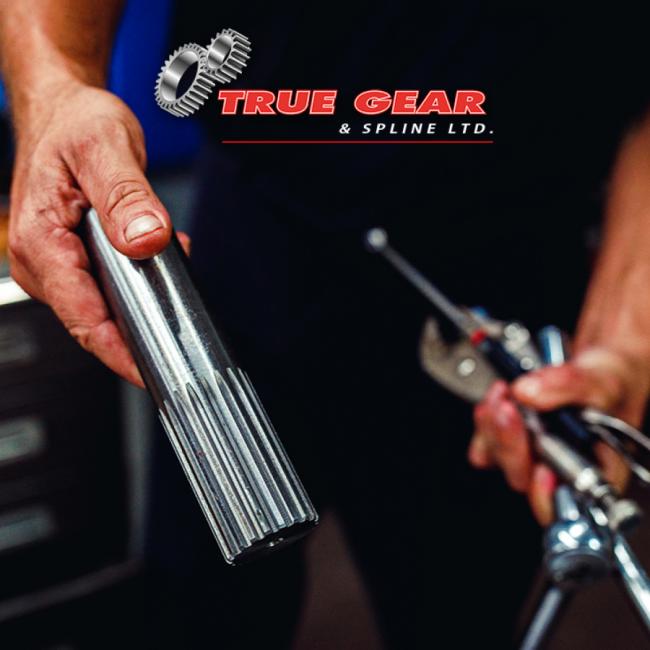
A one-size-fits-all approach doesn’t work very well for OEMs. Original Equipment Manufacturers (OEMs) must adhere to the highest precision and accuracy at all times. They are responsible for manufacturing parts or equipment that go into another company's final product.
Even the slightest deviation can render the equipment useless, costing both the OEMs and partner companies money. Since much depends on torque-transmission components, OEMs can greatly benefit from custom-machined splined shafts. They are built to meet specific requirements and do not buckle under pressure.
What Makes Custom-Machined Splined Shafts Different
Standard splined shafts are only good for generic applications. When OEMs require specific tolerances and configurations, they often rely on custom splined shafts designed for their exact application requirements. Continue reading to learn what makes custom-machined splined shafts different.
Standard vs custom splined shafts
Standard spline shafts are not flexible. Meaning, they are made with fixed dimensions and tolerance with no scope for adjustment. Custom splined shafts differ from standard shafts in that they are made to meet specific torque requirements. Everything from the dimensions and tolerances to the material and surface finishing is carefully decided. Standard splines are suitable for generic applications only.
Material selection for custom shafts
A spline shaft is only as good as its material. That’s why custom spline shaft manufacturers put a lot of effort into choosing the right material. Many factors go into choosing the right material for custom shafts. Here are some of them:
-Torque requirements
-Operational environment
-Load type
-Shock resistance
-Wear resistance requirements
-Cost
Here are some of the most common materials used for splined shaft manufacturing:
Stainless steel
Alloy steel
Bearing steel
Aluminum alloys
Carbon steel
Precision machining and tolerances
Precision machining is the key to achieving accurate tolerances. The use of digital design software and CNC machining techniques eliminates flaws that cause vibrations and misalignments. For OEMs, any sort of system inefficiency can be troublesome. This is why custom spline shafts are the obvious choice.
Surface finishing and heat treatment
Surface finishing and heat treatment are key aspects that make custom spline shafts perfect for OEMs. The right treatment and finishing methods can significantly improve a spline’s wear resistance, durability and strength. They also help reduce friction and ensure seamless torque transmission.
Key Benefits of Custom Splined Shafts for OEMs
If you are wondering why OEMs must choose custom splined shafts, you are at the right place. Here are some of the key benefits of custom splined shafts for OEMs.
Improved torque transmission efficiency
Custom spline shafts are designed to mate perfectly with internal splines and corresponding hubs. Thanks to accurate dimensions and precise tolerance, there is no risk of slippage, vibrations, or even noise. All these factors lead to improved torque transmission efficiency. No energy loss. No hassle.
Better load distribution and reduced wear
The cylindrical design and the lengthwise ridges promote even load distribution. Since the load is not restricted to one area of the shaft, it does not break or get damaged easily. With better load distribution comes reduced wear and prolonged life. Precise manufacturing and adequate lubrication are essential to guarantee reduced wear.
Higher alignment accuracy
As already mentioned, custom splined shafts are designed to mate perfectly with corresponding hubs and internal splines. The higher alignment accuracy of custom shafts benefits OEMs, as there is no risk of vibrations or noise. Moreover, higher alignment accuracy plugs energy leaks during torque transmission and facilitates smoother operations.
Longer service life
The superior wear resistance, strength, and absence of localized stress mean spline shafts perform in top condition for many years. OEMs can save money and effort in repairs and maintenance by sourcing top-notch custom spline shafts for torque transmission.
Compatibility with custom assemblies
No two OEMs have the same manufacturing requirements. Hence, it is rare to find OEMs in different sectors using generic assembly lines. Since custom assemblies are the norm, they cannot rely on standard splined shafts as they won’t fit in seamlessly. This is where custom splined shafts prove to be beneficial. OEMs can get splined shafts made that are compatible with their existing custom assemblies.
Checklist: Benefits OEMs Should Evaluate
Torque capacity requirements
Load distribution performance
Alignment precision
Wear resistance
Maintenance requirements
Expected service life
Design Considerations for Custom Splined Shafts
Custom splined shafts must be designed and manufactured with utmost precision to ensure seamless alignment. Here are some of the most important design considerations for custom splined shafts.
Torque and load requirements
Considering torque and load requirements are essential before manufacturing custom splined shafts. Torque is the rotational force a spline shaft can handle, and load is the cumulative radial, axial, or bending force a splined shaft must handle. It is based on the torque and load requirements that the following factors are decided:
- Tooth geometry
- Material hardness
- Shaft type
- Spline fit class
- Heat treatment method
Shaft diameter and length
The diameter and length of the shaft directly influence its torque and load handling capabilities. Furthermore, accurate dimensions are crucial to ensure the shaft seamlessly fits into the existing assembly line. The slightest miscalculation in shaft diameter and length can render it useless.
Spline profile selection (involute vs straight)
Spline profile selection is among the most important design considerations for custom shafts. Involute spline shafts have curved tooth flanks and are ideal for high-torque applications. Meanwhile, straight-splined shafts are perfect for low-speed applications.
Material strength requirements
Choosing the right material is a crucial step in the design process of splined shafts. The material selection is done based on factors such as:
- Torque and load capacity
- Wear resistance requirements’
- Machinability requirements
- Cost
- Fatigue strength requirements
Operating environment and temperature
These factors play a crucial role in determining the performance and longevity of custom splined shafts. Special considerations, like choosing hard materials and ensuring adequate surface treatment, are necessary if the spline shafts are supposed to operate in challenging conditions. Factors such as exposure to moisture, chemicals, and extreme temperatures are considered when making the right decisions.
Steps: Designing a Custom Splined Shaft
- Determine torque requirements
- Select spline type
- Choose appropriate material
- Define shaft dimensions
- Specify tolerances
- Select a heat treatment process
- Finalize surface finishing
Conclusion
Custom splined shafts improve OEM performance by offering a wide range of performance benefits, including superior torque transmission, even load distribution, and impeccable alignment. All these factors mean maximum efficiency, minimal repairs, and zero downtime. Choosing custom splined shafts over standard splines also offers long-term cost benefits.
True Gear & Spline Ltd. in Cambridge, Ontario, is a name you can trust for the best spline shafts. Our state-of-the-art facility is equipped with the latest tools and equipment for achieving precision and tight tolerance.
We also manufacture gear couplings, sleeve couplings, and spur gears, among others. Call 519-653-1301 to get a free quote today.
FAQs
What is a splined shaft used for?
A splined shaft is used to transmit torque and power between rotating components while ensuring precise alignment. It is among the most important torque transmission components that OEMs rely on. Splined shafts facilitate axial movement and leave no scope for misalignment.
What is the advantage of splines over keys?
The uniform load distribution of splined shafts ensures superior torque transmission, higher load capacity, and exceptional alignment. These benefits make splined shafts a superior choice over splined keys.
What are the different types of splines?
While the involute spline is the most important shaft type, here are some other common spline types:
- Parallel key splines
- Serration splines
- Helical splines
- Ball splines
- Crowned splines
How are splined shafts manufactured?
Splined shafts are manufactured using techniques such as hobbing, milling, and broaching. Reliable manufacturers use CNC technology to ensure precise tolerance and flawless alignment. Moreover, surface treatments like carburizing, nitriding, zinc plating, and induction hardening are used to improve durability and efficiency.
What material is used for splined shafts?
Here are some common materials used for spline shaft manufacturing,
- Stainless steel
- Alloy steel
- Bearing steel
- Aluminum alloys
- Carbon steel