
Keep up to date with us on the latest industry news as well as what's going on at True Gear & Spline Ltd. We also post articles for insider tips and tricks, so make sure to check back frequently.
How Precision Gear Cutting Drives Manufacturing Efficiency
Modern manufacturing is all about precision and efficiency. A manufacturer’s success today largely depends on not just being unique but also being perfect. In a highly competitive market, even the tiniest lapse can have detrimental effects. It won’t be an exaggeration to state that the success and failure of a manufacturer depend on the torque transmission components.
Without a dependable gear that does its job, there can be no manufacturing whatsoever. This highlights just how important precision gear cutting is for modern manufacturing. Gear cutting is the process of removing material from the gear blank until it becomes a perfect torque-transmission component. However, it is easier said than done. It requires access to state-of-the-art gear cutting equipment, CNC machining, and an experienced workforce.
In this blog, we highlight the importance of gear cutting in modern manufacturing. If you are wondering just how important precision gear cutting is for precision manufacturing, you will have the answer by the end of this blog.
Why Precision Gear Cutting Matters?
If you are wondering why precision gear cutting is so important for manufacturers, continue reading. We highlight important reasons why precision gear cutting matters in manufacturing.
Impact on Gear Performance
A gear that is not precisely cut leads to energy loss during torque transmission. It also increases the risk of misalignment by failing to mesh accurately. Compromised gear performance compounds over time and could become the reason your manufacturing unit experiences frequent downtimes.
Even Load Distribution
A gear that is manufactured with precision boasts accurate tooth geometry. This, in turn, promotes an even distribution of load and prolongs the gear’s life. An even load distribution prevents stress points, a primary cause of premature wear and tear.
Noise and Vibration
If your operations demand a quieter, vibration-free setting, then precision gear manufacturing is the only way to achieve it. A gear with imperfect tooth geometry vibrates and, as a result, generates noise. Vibrations are not merely an inconvenience but also a leading cause of misalignment and compromised efficiency.
Dimensional Accuracy
No two manufacturing facilities might have the same gear requirements. The need for custom gear with dimensional accuracy is quite evident. Precision gear manufacturing, powered by CNC machining and sophisticated gear-cutting techniques, produces gears with tight tolerances.
Ensuring Reliable Torque Transmission
Torque transmission is what makes a manufacturing business possible. Precision gear cutting matters because it helps you achieve reliable torque transmission. Frequent downtime due to unreliable torque transmission compromises profits and increases overheads.
Common Gear Cutting Techniques
Gear cutting is an intricate process with very little scope for error. Let’s take a look at some of the most common gear cutting techniques without further ado.
Gear Hobbing
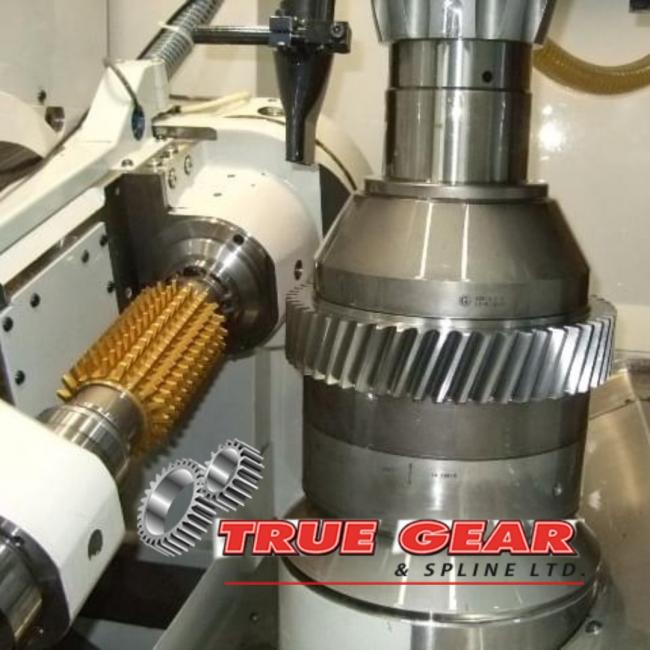
Arguably the most popular gear-cutting technique, gear hobbing ensures quick turnaround time without compromising precision. It uses a specialized gear-cutting tool called a hob to achieve continuous machining. The hob and the gear blank both rotate in sync to achieve progressive gear cutting. Although it is called “gear” hobbing, it is also used to manufacture splined shafts and sprockets.
Gear Shaping
Gear shaping is another reliable and popular gear cutting technique. It relies on a specialized tool called a shape cutter to achieve precision. The shape cutter moves up and down in sync with the gear blank to carve out material from it. Gear shaping is particularly preferred for manufacturing internal gears and custom splined shafts.
Gear Milling
Gear manufacturers consider milling as a reliable and economical technique for manufacturing spur, bevel, and helical gears. It is also widely used for prototyping. CNC milling machines guarantee quick turnaround and precise tolerance. It uses a multi-point tool to cut teeth into a gear blank.
Gear Broaching
Similar to milling, broaching also uses a multi-point tool to remove material from the gear blank. The cutting tool is called a broach, and is pushed or pulled linearly against the workpiece to create the perfect gear. The speed of gear broaching is unmatched, as it uses a single pass rather than progressive cutting.
Which Gear Cutting Technique is the Best?
There is no right or wrong answer to this question. The best gear cutting technique depends on the specific application, expected turnaround time, gear material, budget, and gear type. You can consult gear cutting experts at True Gear & Spline Ltd. in Cambridge, Ontario, for all your gear manufacturing requirements. Our experienced team will take the time to understand your requirements before suggesting the best gear-cutting technique.
We have worked with industries such as Automotive, military, aerospace, mining, energy, and manufacturing, to name a few. Our vast experience enables us to handle your manufacturing request carefully and thoroughly. Call 519-653-1301 to learn about all we can do for you. Whether you want spur gears in bulk or splined shaft prototypes, we are here to help.
FAQs
What is gear cutting?
Gear cutting is the process of removing excess material from a gear blank to create torque transmission components with precise tolerances. Depending on the gear-cutting technique, it uses different cutting tools to manufacture gears.
What are the most common gear cutting techniques?
Hobbing, shaping, milling, and broaching are the most common gear cutting techniques used by gear manufacturers. The prevalence of CNC technology allows gear manufacturers to achieve precision, irrespective of the gear-cutting technique.
Why is precision gear cutting important in manufacturing?
Gears are the backbone that keeps a manufacturing plant running. Even the smallest deviation in the gear dimension can cause energy loss and downtime. Precision gear cutting maximizes efficiency.
Which is the best gear cutting technique?
The best gear-cutting technique depends on various factors such as expected turnaround time, gear material, gear type, volume, and budget. You can consult our experts at True Gear & Spline Ltd. in Cambridge, Ontario, for all your gear manufacturing requirements. Call 519-653-1301 to get a free quote today.