
Keep up to date with us on the latest industry news as well as what's going on at True Gear & Spline Ltd. We also post articles for insider tips and tricks, so make sure to check back frequently.
How Spline Shafts Improve Torque Transmission Efficiency
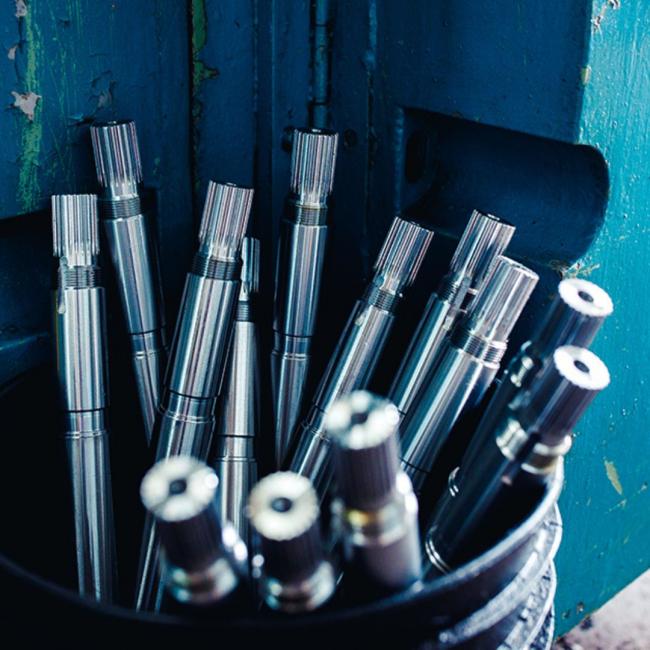
Spline shafts are quite popular in the industrial world and rightly so. Their ability to improve torque transmission efficiency is second to none. The simple geometry makes it easy to manufacture with CNC machining.
Traditional keyshafts are considered inferior to spline shafts for heavy-duty applications. This is because keyshafts use single-point torque transfer as opposed to the multiple-point contact of the latter. In this blog, we discuss in detail how spline shafts improve the efficiency of torque transmission. Read until the end to make an informed decision.
Key Takeaways
Spline shafts are often the superior choice over traditional keyshafts. The multiple teeth in spline shafts ensure uniform load distribution and thus prevent premature wear.
Proper lubrication, alignment, and material selection make a spline shaft more efficient and durable.
Choosing the right spline profile ensures reliable torque transmission in demanding industrial applications.
What Is a Spline Shaft and Why Does It Matter?
In the world of torque transmission, there is seldom a name that deserves as much praise as a spline shaft. It is a cylindrical shaft with ridges along its length that interlock with the mating component. The sheer brilliance of the design is one of the reasons behind the spline shaft’s efficiency and popularity.
How splines create positive torque engagement
A spline shaft ensures efficient torque transmission by creating positive engagement. How does it do that? The credit, once again, goes to its geometry. The vertical ridges on the cylindrical shaft ensure uniform weight distribution. This means no localized stress could cause premature wear or damage.
Why spline shafts outperform traditional keyways
The absence of localized stress is exactly what makes spline shafts outperform traditional keyways. The durability and fatigue resistance of spline shafts make them a superior choice over traditional keyways.
Common industrial applications of spline shafts
Here are some of the most common industrial applications of spline shafts.
-Automotive transmissions and gearboxes
-Heavy machinery
-Conveyor belts
-Robotic arms used for assembly and material handling
-Mining equipment
Engineers looking for precision splined shafts often rely on specialized machining for high-load applications.
How Torque Is Transmitted Through a Spline Shaft
A spline shaft is one of the best pieces of equipment for transmitting torque and facilitating rotational movement. Ever wonder how spline shafts make it all happen? Continue reading to learn all about it.
Understanding load distribution across spline teeth
A spline shaft is long, cylindrical, and ridges run across almost its entire length. This means there is greater surface area that is in contact with the mating component at any given time. Sharing the load across numerous teeth lowers contact stress and reduces the likelihood of premature failure.
Why multiple contact points improve power transmission
A single-point contact puts all the stress on one particular area. Such unchecked localization of stress causes premature failure. Improved torque transmission, reduced backlash, minimal vibration, durability, and minimal maintenance are some benefits of having multiple contact points.
How alignment impacts torque efficiency
Misalignment between rotating shafts is a hindrance to smooth and uniform torque transmission. Accuracy in alignment is the key to facilitating maximum torque efficiency. Custom couplings are sometimes used to correct alignment issues between splined shafts.
Minimizing slippage under heavy loads
The positive mechanical engagement of splined shafts ensures minimal slippage even when under heavy loads. This makes them ideal for heavy-duty applications such as in heavy machinery and automotive transmissions.
Understanding torque transmission systems helps explain why splined shafts are critical in high-performance machinery.
Key Factors That Influence Torque Transmission Efficiency
Here is a clear breakdown of factors that influence the efficiency of torque transmission systems.
Number of spline teeth
More teeth generally translates to better torque efficiency. However, optimization is the key to best results. Why is that? Too many teeth compromise the structural integrity and overall load capacity of the shaft. Carving too many ridges on the circumference of the shaft means the individual thickness of each ridge must be compromised.
Tooth geometry and profile
Much like the number of teeth, its geometry and profile are equally important to ensure effective torque transmission. A spline shaft with the perfect design and tooth profile ensures durability and efficiency.
Shaft material selection
A shaft is only as good as its material. Gear manufacturers use high-speed steel, carbon steel, or other specialized alloys to ensure durability and efficiency. Low-strength material causes problems such as warping and distortion.
Surface finish and tolerance accuracy
Surface finishing is important as it ensures an even surface area for splined shafts. Mechanical surface finishing is used to eliminate rough edges and reinforce tolerance accuracy. Meanwhile, chemical and electrochemical surface finishing offer the first line of defence against corrosion and other damage.
Lubrication and wear resistance
Friction is naturally generated when two shafts interlock and work together to transmit torque. However, unchecked friction can wreak havoc. Lubrication is the key to mitigating friction-related damage and improving the wear resistance of splined shafts.
Performance Factors Checklist
✔ Tooth count optimized
✔ Proper spline profile selected
✔ Material strength verified
✔ Surface finish inspected
✔ Lubrication applied
✔ Load conditions evaluated
Step-by-Step Guide to Selecting the Right Spline Shaft
Selecting the right spline shaft is easier when armed with the right information. Here is a step-by-step guide to choosing the right spline shaft.
Step 1: Determine torque requirements
Knowing exactly how much torque needs to be transmitted is the first step to sourcing the right shaft. It is important to calculate maximum operating torque and take into account overload conditions and safety factors.
Step 2: Identify operating conditions
Operating conditions largely impact the durability and efficiency of splined shafts. Gear manufacturers choose material and surface finishes based on operating conditions such as moisture, temperature, and exposure to chemicals.
Step 3: Select spline profile
Involute, parallel key, serrated, helical, and crowned are different types of spline profiles. You must choose one that fits your specific requirements. Each spline profile has its own set of features and advantages.
Step 4: Review material compatibility
The spline shaft and the mating components must be able to handle the load without backlash or vibration. Moreover, the material and the surface finishing must be appropriate for the operating conditions.
Step 5: Evaluate maintenance needs
Spline shafts are a long-term investment. They can stay intact for many years with the right preventive maintenance servicing. Ask the manufacturer about the maintenance needs to ensure you are not making an expensive or difficult choice.
Steps: Spline Shaft Selection Workflow
- Measure torque load
- Define speed range
- Select spline design
- Match materials
- Review fitment requirements
FAQs
What is the main purpose of a spline shaft?
The main purpose of a spline shaft is to provide torque transmission and rotational force between mechanical components. Spline shafts are preferred over gears for high-torque applications owing to their superior strength and performance.
How does a spline shaft improve torque transmission?
A spline shaft improves torque transmission by facilitating uniform load distribution, minimizing backlash, providing secure interlocking with the mating component, and preventing localized stress.
Are spline shafts stronger than keyed shafts?
Yes, spline shafts are stronger than keyed shafts due to multiple-point contact with the mating component.
What industries use spline shafts the most?
Automotive, energy, robotics, mining, heavy machinery, and construction industries use spline shafts for a wide range of applications.
How do I choose the right spline shaft design?
Consider factors such as estimated torque load, operating environment, and budget before choosing spline shafts. Work with an experienced spline shaft manufacturer such as True Gear & Spline Ltd. in Cambridge, Ontario, for the right guidance.