Toll Free:
1-877-270-9985, Phone:
519-653-1301, Fax:
519-653-2253
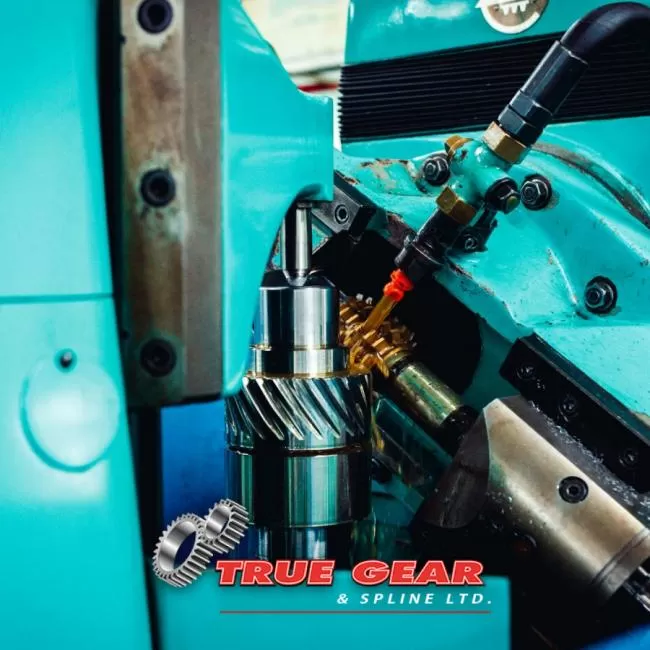
Torque transmission is at the core of high-performance mechanical systems. Mechanical systems cannot function properly without reliable torque transmission components such as spine shafts, gears, and couplings. Torque transmission outputs directly proportional to the performance of mechanical components.
Torque is the rotational force that facilitates the transfer of energy through aforementioned components such as shafts, gears, and couplings. Transmission matters because, without it, industrial machinery and equipment can not get things done. Here are examples of applications that require effective torque transmission in an industrial setting.
While splined shafts, gears, and couplings are all torque transmission components, they differ in how they function. While shafts are known for carrying torque over distance, gears are designed to influence speed, and couplings are designed to handle slight misalignment between intersecting joints.
Torque, power, and speed are all fundamentals of understanding rotational power. Here’s a clear and brief explanation of these terms.
Torque: The twisting force, or rotational force, applied to a rotating object (such as a gear).
Speed: This is pretty straightforward to understand. Speed is the rate at which the gear or splined shaft rotates. It is measured in RPM (rotations per minute)
Power: This is the rate at which the work gets done. It is calculated by simply multiplying torque by speed.
You can either choose higher torque at lower speed or vice versa, depending on the requirement. The level of power vs speed required influences this decision.
These are important terms one must understand to understand torque transmission completely.
Direction: Simply put, direction implies the direction in which the force is applied and which way the object will rotate (clockwise and counterclockwise). The direction is influenced by the direction you push, related to the pivot point of the rotating object.
Magnitude: This determines how fast the object starts spinning or how much effort it takes to stop the spinning object. The length of the lever, from the point of pivot, determines how easy or difficult it is to start or stop a moving object.
Continuity: Torque can be applied to a moving object in two ways: continuously and intermittently. A fan or a car’s motor are accurate examples of continuous torque, whereas a bicycle, where the force is applied through the pedal intermittently, is an apt example of the latter.
Since torque measures rotational force, it is calculated as force x lever arm distance. The SI unit used is Newton-meters (N-m), and the imperial unit is pound-feet (lb-ft). Accurate torque estimation and measurement are essential to source the right torque transmission components. You can coordinate with torque transmission component manufacturers and experts to gain accurate insights.
Spline shafts are quite popular for torque transmission in the industrial world. One of the unique features of spline shafts is the even load distribution. The ridges or grooves cut across the length of the spline shafts prevent concentration of stress at any one point. The structural integrity and alignment spline shafts offer is unmatched.
Choosing between the two is quite simple. Go for solid spline shafts if the application demands higher torque, and choose hollow shafts if the application requires more speed. While solid splines are known for structural integrity, hollow shafts are known for their impressive strength-to-weight ratio.
When it comes to diameter, it comes down to simple physics. The larger the diameter, the stronger the spline shaft will be. The same goes for material selection. It is generally better to go for thicker, stronger metals for high-torque applications to prevent compromised structural integrity and breakage.
Torsional stress is the ability of the shaft to resist twisting forces without breaking or failing. A shaft with weak torsional stress deforms quickly, making it prone to more maintenance, repairs, and even replacement.
Checklist: Shaft Selection Considerations
Gears transmit and modify torque by meshing or interlocking teeth. The rotational force is transferred from the driver to the driver. The tolerance in gear manufacturing is extremely crucial, as that’s what determines the level of accuracy and efficiency in torque transmission. Torque modification is done by modifying based on the size difference or gear ratio.
In applications where torque must be increased or reduced with high accuracy, spur and helical gears are commonly used to maintain consistent power transfer under load. For projects that require custom dimensions, tighter tolerances, or specific load characteristics, engineers often evaluate detailed spur and helical gear configurations before finalizing the drivetrain design.
Gear ratios and torque multiplication are both factors you must understand if considering sourcing gears for torque transmission. Gear ratio describes the relationship between the radius of the driver gear and the driven gear. For applications demanding greater torque, the driver gear has a smaller radius than the driven gear. However, for applications that require greater speed, the gear sizes must be vice versa.
Factors like friction, lubrication, and environmental conditions cause energy loss during torque transmission through gear systems. To calculate available torque output, it is important to consider all such factors. The gear type also makes a difference in torque transmission depending on the intended application. It is best to consult a gear expert, convey your specific requirements, and choose a gear system that ensures maximum efficiency and minimal energy loss.
Backlash is the clearance between the mating tooth flanks of two gears. It is designed to accommodate thermal expansion and lubricant films that protect torque transmission components. Excessive backlash is a problem as it causes noise and vibration, gradually causing energy loss. Accurately determining the gear output is key to ensuring the right backlash. Here are the steps to ensure accurate torque output determination.
Steps: Determining Gear Torque Output
In applications where torque must be increased or reduced with high accuracy, spur and helical gears are commonly used to maintain consistent power transfer under load. For projects that require custom dimensions, tighter tolerances, or specific load characteristics, engineers often evaluate detailed spur and helical gear configurations before finalizing the drivetrain design.
Couplings are a highly effective yet often overlooked aspect of torque transmission. They are designed to handle misalignment between two intersecting shafts. Couplings can handle both angular and linear misalignments. Without the right couplings, there is a risk of premature wear and poor performance of torque transmission components.
Rigid coupling is a simple, low-cost option to connect two shafts to act as one continuous shaft. Sleeve coupling is a classic example of rigid coupling.
When two aligned shafts need to transmit torque reliably with minimal complexity, sleeve couplings are often selected for their simplicity and load-handling capability. In systems where bore size, shaft fit, or torque rating must be matched precisely, reviewing available sleeve coupling configurations helps ensure proper power transmission and long-term reliability.
Flexible couplings, on the other hand, allow for minor angular, parallel, and axial misalignment. However, flexible couplings are generally more expensive. Rigid couplings are used in turbine generators, CNC machines, and gearboxes. Meanwhile, flexible couplings are found in motors, fans, and fire sprinklers.
Excessive vibration and misalignment are both counterproductive to seamless torque transmission. A flexible coupling’s ability to accommodate angular and parallel stresses makes it the perfect solution to keep misalignment and vibration in check.
Every torque transmission system has torque limiters, which are basically circuit breakers, to prevent overloads from damaging expensive components. Such mechanical torque limiters are found in conveyors, automotive drivetrains, agricultural equipment, power generators, and printing machines.
Checklist: Choosing the Right Coupling
Achieving a seamless torque transmission is about much more than just individual components. It is about creating a system of gears, spline shafts, and couplings that function cohesively without failing under torsional stress or fatigue. You must work with an experienced torque transmission component manufacturer like True Gear & Spline Ltd. With over 60 years of experience, a state-of-the-art facility, and a team of experts, we can deliver flawless gears, splined shafts, and couplings each time. Call 519-653-1301 or click here to request a free quote today!
Torque transmission is the transfer of rotational force from a power source, such as a motor or engine, to driven components like shafts, gears, or machinery. It allows mechanical power to move, lift, cut, or rotate loads efficiently. Proper torque transmission ensures smooth operation, reduced energy loss, and consistent performance under varying working conditions.
Gears change torque through gear ratios. When a small driving gear turns a larger driven gear, torque increases while speed decreases. When a large driving gear turns a smaller driven gear, speed increases, but torque reduces. This controlled balance between speed and force makes gears essential in power transmission systems.
Couplings connect rotating shafts and transmit torque while accommodating slight misalignment. They help absorb shock loads, reduce vibration, and protect connected components from damage. This improves system reliability and extends the service life of shafts, bearings, and gears.
Failures often result from misalignment, excessive load, poor lubrication, material fatigue, or incorrect component selection. Environmental factors such as heat, moisture, and corrosion can also accelerate wear and lead to breakdowns.
Component selection depends on torque load, operating speed, alignment tolerance, duty cycle, and environmental conditions. Choosing properly rated materials and designs ensures efficient, safe, and long-lasting mechanical power transmission.
Request a quote today and discover why industries across North America trust us for their gear manufacturing needs.