
Keep up to date with us on the latest industry news as well as what's going on at True Gear & Spline Ltd. We also post articles for insider tips and tricks, so make sure to check back frequently.
Spline Shaft Failures and How Precision Engineering Helps
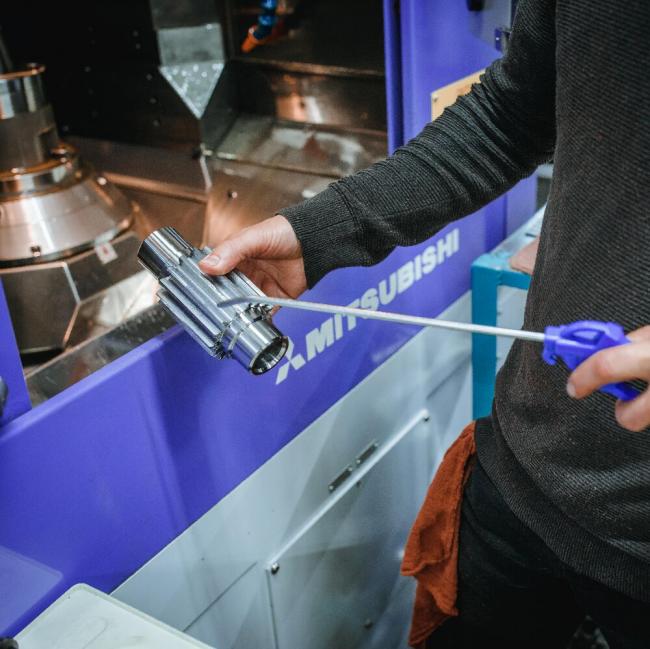
A spline shaft is one of the most important components in any power transmission system. It ensures smooth torque transfer, precise alignment, and reliable rotational movement. But when a spline shaft fails, the consequences can be downtime, equipment damage, safety risks, and costly repairs. Understanding why these failures happen is the first step toward preventing them.
What Are the Most Common Causes of Spline Shaft Failure?
Spline shafts can fail due to a combination of mechanical stress, poor fitment, or inadequate material strength. Some of the most common issues include:
- Wear caused by insufficient lubrication or misalignment
- Twisting or torsional overload due to torque spikes
- Tooth deformation
- Backlash and vibration from inaccurate tooth geometry
- Corrosion or wear and tear in harsh environments
Many of these failures are insignificant when they arise and worsen over time, eventually leading to catastrophic breakdowns.
How Does Inaccurate Tooth Geometry Lead to Degradation?
Even minor inaccuracies in tooth spacing or form result in uneven force distribution in rotation. When force is not distributed evenly, teeth can take more stress, causing accelerated wear, vibration, and harmful backlash.
Precision engineering is critical because spline shafts rely on perfect engagement between internal and external splines. Poorly made components cannot maintain this fit under continuous loads.
Why Is Material Quality and Heat Treatment So Important?
Spline shafts work under high stress conditions, making material selection and heat treatment essential. Inadequate hardness or poor metallurgical structure can lead to:
- Tooth chipping
- Cracking
- Surface pitting
- Inadequate load capacity
Proper heat treatment increases hardness and wear resistance while maintaining core toughness, allowing spline shafts to withstand demanding environments.
How Does Precision Engineering Prevent Failures?
High-quality spline shafts offer:
- CNC machining for tight tolerances
- Precision hobbing and shaping for accurate tooth geometry
- Grinding to achieve uniform surfaces
- Rigorous inspection
- Material expertise to match shaft performance with application requirements
When manufactured correctly, spline shafts operate smoothly, minimize wear, and deliver long service life and reliable performance.
Why Work With True Gear & Spline Ltd.?
True Gear & Spline Ltd. is a leader in precision gear and spline manufacturing. With advanced CNC machining, expert manufacturing, and rigorous quality control, we produce spline shafts specifically engineered to prevent failures and deliver reliable performance in even the most demanding applications. Call 519-653-1301 to learn about all we can do for you.
FAQs:
What causes spline shafts to fail most often?
Spline shafts commonly fail due to wear from poor lubrication, torsional overload, inaccurate tooth geometry, misalignment, corrosion, and material fatigue over time.
How does precision engineering improve spline shaft lifespan?
Precision engineering ensures accurate tooth geometry, tight tolerances, even load distribution, reduced vibration, and improved wear resistance, preventing premature failure.
Who is a reliable spline shaft manufacturer in Ontario?
True Gear & Spline Ltd. is a trusted spline shaft manufacturer in Ontario, known for precision CNC machining, expert material selection, and strict quality control.