
Keep up to date with us on the latest industry news as well as what's going on at True Gear & Spline Ltd. We also post articles for insider tips and tricks, so make sure to check back frequently.
What You Need to Know About Bevel Gears in Mechanical Power Systems
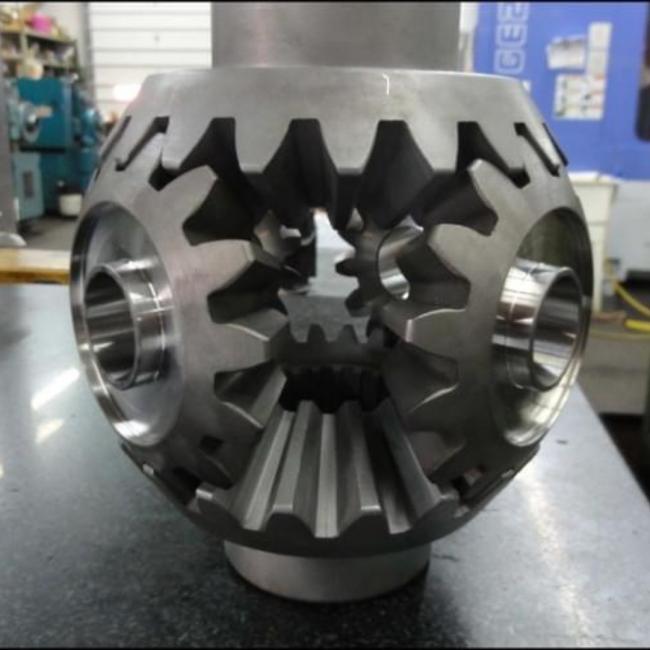
Bevel Gears and Angular Power Transmission
When it comes to angular power transmission, all fingers point in one direction — bevel gears. The unique design, customisability, and durability make bevel gears perfect for high-stress applications.
What a bevel gear is in mechanical systems
A bevel gear is a mechanical component, pivotal in transmitting power between two intersecting shafts, typically at a 90-degree angle. Unlike spur or helical gears operating on parallel shafts, bevel gears are specifically engineered for the transfer of angular torque. Their conical shape enables the gear teeth to engage smoothly as the direction of motion within a mechanical system changes.
In industrial setups, machinery layouts demand power to be redirected without increasing system size. This is where bevel gears become indispensable within power transmission systems. They allow compact, efficient torque redirection without the need for complex assemblies.
Why angular torque transmission matters
Most mechanical systems are not constructed in straight lines. Motors, shafts, and driven components are often arranged at angles due to spatial constraints or design requirements. Angular torque transmission ensures that energy from a power source can reach components positioned in different orientations without excessive loss.
Where bevel gears fit within power transmission systems
Bevel gears provide systems with efficiency and flexibility. They are widely used wherever right-angle torque transmission is needed in maintaining reliability and load capacity in a compact system.
How do Bevel Gears Transmit Torque Between Intersecting Shafts?
Torque flows through intersecting axes
Bevel gears operate by meshing cone gear teeth along intersecting axes. As one gear rotates, the angled tooth ensures continuous contact, transferring torque smoothly from one shaft to another.
Direction change and speed variation
Depending on the gear ratio, the bevel gear can either maintain speed or alter it while redirecting motion. This allows engineers to control output speed and torque simultaneously while changing direction.
Load transfer characteristics at right angles
Right-angle load transfer introduces unique stress patterns. Bevel gears are designed to distribute these loads evenly across the tooth surface, reducing wear and increasing longevity.
The Geometry Behind Bevel Gear Performance
How pitch cone geometry affects torque transfer
Bevel gears operate on a pitch cone rather than a pitch cylinder like spur gears. This conical geometry allows the gear teeth to maintain consistent engagement while transferring motion across intersecting shafts. The angle of this cone directly influences how torque is distributed across the tooth surface during operation.
A properly designed pitch cone ensures that the load is shared progressively along the tooth face rather than concentrated at a single point. This is critical in preventing localized stress, which is a common reason for premature bevel gear wear.
Tooth profile and contact pattern
The tooth profile of a bevel gear determines how smoothly power is transmitted. In spiral and Zerol bevel gears, especially, the curved tooth path allows gradual engagement, improving load sharing and reducing vibration. Contact patterns are carefully engineered so that torque transmission remains stable even under varying loads.
Why superior geometry determines durability
Small errors in geometry can lead to uneven contact, noise, excessive heat, and rapid tooth fatigue. This is why precision manufacturing and inspection are essential in bevel gear production, especially for high-load industrial applications.
What Types of Bevel Gears are Used in Mechanical Power Systems?
There are different types of bevel gears, each with its own strength and applications. Continue reading to learn all about it.
Straight bevel gears
Straight bevel gears have straight teeth and are the simplest form. They are cost-effective and suitable for moderate speeds and loads.
Spiral bevel gears
Spiral bevel gears feature curved teeth that engage gradually, reducing noise and allowing higher load capacity and smoother operation.
Zerol bevel gears
Zerol bevel gears resemble spiral bevel gears but with zero spiral angle, offering a balance between straight and spiral designs.
Hypoid bevel gears
Hypoid gears allow non-intersecting shafts and are commonly used where offset alignment is required, such as in automotive differentials.
These variations demonstrate the benefits of bevel gear selection based on application requirements, especially regarding efficiency, noise control, and load handling.
Key Benefits of Using Bevel Gears in Power Transmission
Compact torque redirection
Bevel gears change the direction of torque within a small space. This removes the need for additional transmission components and keeps machinery layouts simple. It is especially useful in compact equipment designs.
Efficient power transfer
Their tooth geometry allows consistent engagement during rotation. This reduces energy loss and improves mechanical efficiency over time. Motors and connected components experience less strain as a result.
Design flexibility in mechanical layouts
Bevel gears allow shafts to be arranged at angles without affecting performance. Engineers can design more easily around space constraints. This flexibility supports the development of more practical and innovative machinery designs.
Suitability for high-load environments
Spiral and hypoid bevel gears distribute stress effectively across the tooth surface. This allows them to handle significant torque loads reliably. They are commonly used in heavy-duty industrial applications for this reason.
Spiral and hypoid bevel gears can handle significant torque loads reliably.
Checklist: When are Bevel Gears a Good Choice?
- Intersecting shaft requirement
- Space constraints
- Directional torque change
- Moderate to high torque loads
- Mechanical simplicity preference
Common Bevel Gear Applications Across Industries
The popularity of bevel gear applications stems from its versatility. Thanks to its efficiency and availability, bevel gears are widely sought for the following applications:
Automotive drivetrains and differentials
Bevel gears transmit torque at right angles from the driveshaft to the wheels. They also allow smooth turning by distributing power efficiently. Their compact design and strength make them ideal for this role.
Industrial machinery and equipment
Many machines need power redirected within a limited space. Bevel gears achieve this without adding extra components. This keeps systems simple and reliable.
Material handling systems
Conveyors and lifting systems often use bevel gears to change the motion direction. They support long operating hours with consistent performance. Their compactness suits crowded equipment layouts.
Heavy-duty power transmission setups
Mining and construction equipment rely on bevel gears for high torque handling. Spiral and hypoid types perform well under heavy loads. They ensure durability in demanding conditions.
Precision mechanical assemblies
Robotics and precision systems use bevel gears for accurate angular motion. They maintain alignment while transferring torque. This supports both accuracy and reliability.
Design and Selection Considerations for Bevel Gears
Shaft angle and alignment accuracy
Bevel gears rely on precise shaft intersection angles for proper tooth engagement. Even slight misalignment can shift the contact pattern and create uneven load distribution. Careful installation and alignment checks are essential for long-term performance.
Load capacity and torque requirements
The gear must be selected based on the actual torque demands of the system, including peak loads. Incorrect sizing often leads to gradual surface fatigue rather than immediate failure. Matching gear size and type to load conditions improves durability.
Material selection and heat treatment
The strength of a bevel gear depends on both the material and the heat treatment applied. A hardened surface resists wear, while a tough core prevents brittleness under stress. This combination is especially important in industrial environments with continuous operation.
Speed, noise, and efficiency trade-offs
Different bevel gear types behave differently at various speeds. Straight bevel gears are suitable for lower speeds, while spiral and Zerol gears provide smoother, quieter operation. Choosing the right type improves efficiency and reduces vibration.
Checklist: Bevel Gear Selection Factors
- Shaft intersection angle
- Required torque output
- Operating speed
- Environmental conditions
- Expected service life
Manufacturing Precision and Its Impact on Bevel Gear Reliability
The role of machining accuracy
Bevel gears require extremely tight tolerances due to their angular engagement. Even minor machining deviations can affect how the teeth mesh, leading to misalignment during operation. Precision cutting, grinding, and finishing directly affect performance and lifespan.
Heat treatment and material integrity
Material selection alone is not enough. Proper heat treatment processes, such as carburizing, hardening, and tempering, improve surface strength while maintaining core toughness. This balance allows bevel gears to withstand high torque without becoming brittle.
Inspection and quality control
Advanced inspection methods, including tooth contact pattern analysis and dimensional verification, ensure that gears meet operational standards before installation. These checks reduce the risk of early failure once the gear is integrated into a mechanical system.
For industries where downtime is costly, manufacturing precision is not a luxury but a requirement.
Common Challenges and Failure Modes in Bevel Gears
Misalignment and uneven load distribution
Improper alignment leads to premature tooth wear.
Tooth wear and surface fatigue
Continuous stress can cause pitting and fatigue over time.
Noise and vibration issues
Often linked to incorrect gear selection or poor installation.
Lubrication-related failures
Inadequate lubrication increases friction and heat.
Steps: Reducing Bevel Gear Failure Risk
- Ensure precise alignment
- Match gear type to load conditions
- Use appropriate lubrication
- Monitor wear patterns regularly
Bevel Gears Compared to Other Power Transmission Components
Bevel gears vs spur gears
Spur gears work on parallel shafts; bevel gears handle intersecting shafts.
Bevel gears vs helical gears
Helical gears reduce noise but cannot redirect torque at right angles.
When bevel gears are the preferred solution
Whenever directional change and compact design are required together.
When Not to Use Bevel Gears in Power Transmission
Parallel shaft requirements
If shafts are parallel, spur or helical gears are more appropriate and cost-effective solutions.
Extremely high-speed applications
In very high RPM environments, helical gears often perform better due to smoother engagement and lower vibration characteristics.
Applications requiring minimal noise
While spiral bevel gears are quieter than straight bevel gears, worm gears or helical gears may still be preferable in noise-sensitive environments.
Complex alignment limitations
Bevel gears demand precise shaft alignment. In systems where maintaining alignment is difficult, alternative transmission components may reduce maintenance challenges.
Understanding where bevel gears are not ideal is just as important as knowing where they excel. This helps engineers make better system design decisions rather than forcing a bevel gear into unsuitable applications.
Conclusion – The Role of Bevel Gears in Mechanical Power Systems
The ability of bevel gears to combine torque redirection, efficiency, and compactness makes them irreplaceable. Correct selection ensures performance, longevity, and system reliability. Bevel gears continue to play a critical role in modern mechanical design because they solve a very specific but common engineering challenge, that is, transmitting torque efficiently between intersecting shafts without increasing system complexity.
Their ability to redirect motion while maintaining load capacity, efficiency, and compactness makes them indispensable across industries ranging from automotive to heavy industrial equipment.
When chosen and manufactured correctly, bevel gears do more than transfer motion — they improve reliability, reduce mechanical stress, and contribute to the overall efficiency and longevity of the power transmission system. True Gear & Spline Ltd. in Cambridge, Ontario, is a name you can trust for the best bevel gear cutting services.
Our state-of-the-art facility is equipped with cutting-edge tools and equipment to provide flawless gear manufacturing. Call 519-653-1301 to place an order or get a free quote today.
FAQs
What is a bevel gear used for?
Bevel gears are used to transmit torque between intersecting shafts, usually at right angles, allowing smooth power transfer in compact mechanical systems.
How do bevel gears differ from spur gears?
Bevel gears operate on angled shafts, while spur gears operate on parallel shafts, making bevel gears ideal for changing the direction of rotation.
What are the advantages of bevel gears?
Bevel gears offer a compact design, efficient torque transfer, and directional flexibility, helping improve performance in space-constrained machinery.
Where are bevel gears commonly used?
Bevel gears are commonly used in automotive systems, industrial machinery, material handling equipment, and heavy-duty applications requiring directional power flow.
What causes bevel gear failure?
Bevel gear failure is often caused by misalignment, improper lubrication, excessive load, and poor gear selection, all of which increase wear and stress.