

Toll Free:
1-877-270-9985, Phone:
519-653-1301, Fax:
519-653-2253
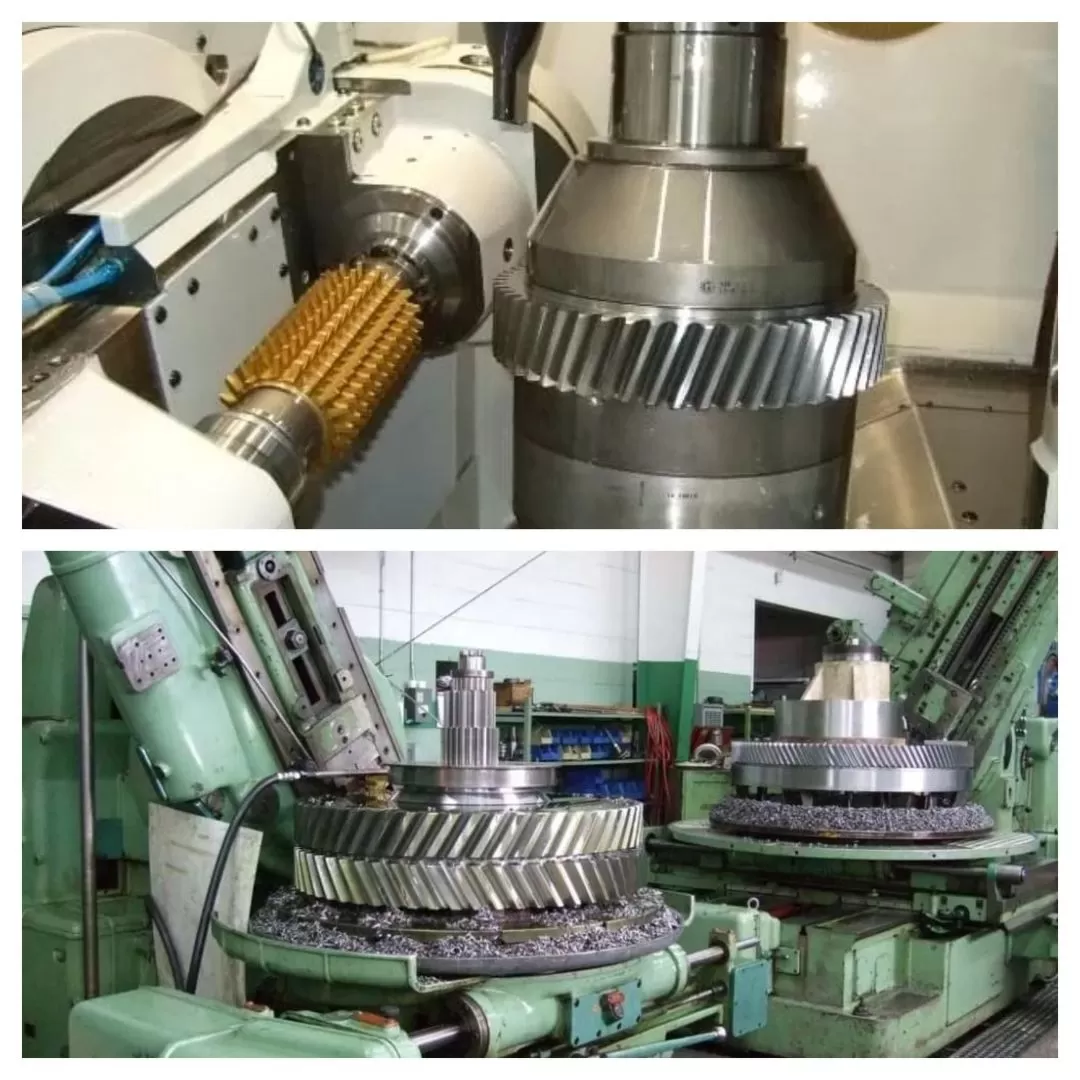
Gear manufacturing is one of the most important industries of our time. Without it, there would be no torque transmission components. If you are an engineer or a manufacturer, understanding which gear cutting process is best for your application is important. It helps you maximize cost efficiency and ensure quick turnaround time.
True Gear & Spline Ltd. in Cambridge, Ontario, has 50+ years in the gear manufacturing industry. We draw from our experience to write this gear-cutting process selection guide for engineers and manufacturers. So, read until the end to make an informed decision.
Selecting the right gear cutting process matters, and here’s why.
What good is a gear that does not seamlessly transmit torque? The wrong gear cutting process significantly hampers gear performance. The tooth geometry and alignment of the gear must be perfect in order to be efficient. The wrong gear-cutting method leads to common issues such as vibration, incorrect spacing, and premature damage.
As a business owner, cost is one of the most significant factors that influences decisions. The real trick when choosing a gear cutting process is to balance precision, cost, and production efficiency. Sometimes, it might not be required to achieve the highest level of precision if it comes at an unaffordable economic cost. Similarly, sometimes you would have to prioritize quick delivery over cost.
The intended application, budget, expected turnaround time, operating environment, and tolerance are certain factors influencing the gear cutting process.
Application requirements are the core factor that should be considered when selecting the gear manufacturing method. Everything else comes later.
There is a wide range of gear-cutting processes to choose from, each with its own strengths and features. Below, we list the most common gear cutting processes and explain them in brief.
In this gear cutting method, the operators use a specialized tool called a hob to cut teeth into gear blanks. A gear hob is generally powered by CNC technology, ensuring precision and speed. In gear hobbing, the blank and the hob move in coordination for flawless results. Gear hobbing is particularly effective for manufacturing spur gears, helical gears, worm gears, splined shafts, and sprockets.
Gear hobbing is limited in its application for manufacturing strictly external gears. Gear shaping, however, is suitable for manufacturing both internal and external gears. In this gear cutting process, a reciprocating cutting tool moves linearly along the gear blank's axis. Like gear hobbing, both the cutter and the blank move synchronously. Gear shaping is particularly effective for manufacturing internal gears, ring gears, external spur gears, helical gears, and splined shafts.
Gear milling is a popular gear cutting process that uses a rotating cutter to remove material from a gear blank, one tooth space at a time. This process of cutting one tooth space at a time is called indexed cutting. Gear milling is generally used for prototyping and production of small batches of custom gears. Since the milling process is slower than other gear cutting techniques, it is not preferred for large production runs.
Gear broaching gets its name from the broach, the cutting tool used in this gear-manufacturing process. It is known for its high-speed gear cutting, in which rough cutting and fine finishing occur in a single stroke. The broach contains multiple cutting teeth, each standing slightly higher than the one before it.
Gear grinding, as the name suggests, uses an abrasive grinding wheel to remove material from the gear blank. It is a common gear-cutting process that is ideal for mass-producing spur, helical, internal, bevel, and worm gears. The gear grinding wheel's continuous meshing with the gear blank ensures faster, precise production.
One of the best things about CNC gear machining is its ability to produce gears with complex geometries. It is also incredibly flexible; whether you want to use it for prototypes or high-volume production, CNC machining is the perfect choice. Since almost everything is handled by sophisticated software and computers, there is no scope for errors or expensive reworks.
When it comes to selecting the right gear cutting method, you cannot leave anything to chance. Here are some important factors to consider when picking the right gear-cutting method.
The ideal gear-cutting process depends largely on the gear geometry and profile. What works for an internal spur gear might not be the best choice for a worm gear. The practical manufacturing method for your gear depends on a wide range of factors, such as tooth count, diametral pitch, pressure angle, and tooth profile.
Carbon steel, alloy steel, non-ferrous metals, stainless steel, cast iron, and even plastic are used to manufacture gears. Each of these materials has different hardness and machinability, so the process you choose must be suitable for the specific material. Material hardness can also influence tool selection, cutting speeds, tool wear, and whether additional heat treatment or finishing operations are required after gear cutting.
Some applications require more precise tolerances than others. It does not make sense to put the entire focus on the required tolerance while avoiding other important factors such as tooth profile accuracy, tooth thickness, and pitch accuracy. The gear manufacturer understands the ideal tolerance for your application before suggesting the right gear-cutting process.
Some gear cutting processes are much quicker than others. If you need a high volume of gears, with precise tolerances, as quickly as possible, gear hobbing might be the right choice. Similarly, for low- to medium-volume gears with complex geometries, CNC machining might be the better option. Production volume is one of the most important factors influencing the choice of gear cutting process.
Your budget and expected turnaround time significantly influence the gear-cutting process selection. Be very clear about both right from the beginning to help gear manufacturers suggest the right option.
Checklist: Project Evaluation Criteria
Before requesting a quote, document:
One of the common misconceptions among engineers is that sophisticated technology can compensate for a lack of technical expertise. We know from our decades of industry experience that this is not true. The human factor plays an important role in successful gear manufacturing. The team you work with must have sound technical expertise. An ideal gear manufacturer must understand the fundamentals such as gear geometry, materials, machining processes, tolerances, and finishing requirements.
Technical expertise can be translated into flawless gears only with the right manufacturing capability. The manufacturing partner must have access to state-of-the-art gear manufacturing tools and equipment. Any gear manufacturer that fails to modernize cannot meet today’s challenging torque transmission component requirements.
Despite the best team and state-of-the-art equipment, there is always a chance of damage. This is why it is important for gear manufacturers to have inspection and quality assurance measures in place. Take your time to understand how the gear manufacturer verifies gear dimensions and tooth geometry.
Be upfront about the delivery and timeline expectations. The gear manufacturer you work with should be able to deliver your order ahead of the deadline to avoid last-minute confusion. They should also be able to accommodate changes in volume, frequency, or delivery timeline in the future.
True Gear & Spline Ltd. in Cambridge, Ontario, is a one-stop destination for all your gear manufacturing requirements. Our state-of-the-art 22,000-square-foot facility is equipped with the latest CNC gear manufacturing equipment, including hobs, shapers, and mills. We use environmentally conscious production methods and go above and beyond to ensure customer satisfaction. Call 519-653-1301 to get a free quote or learn about all we can do for you.
Gear hobbing is one of the most common gear cutting processes. However, that doesn’t make it the go-to gear cutting method by default.
The right gear-cutting process is chosen after considering factors such as the intended application, operating environment, expected delivery timeline, material, and gear geometry.
While no single process is universally recognized as the most precise, gear grinding is often used as a finishing process to correct minor surface and dimensional inaccuracies and achieve a high-quality finish.
While CNC machining is highly flexible and effective, it is not suitable for manufacturing internal gears with complex geometries. Also, CNC machining is generally not preferred for mass-producing gears. Rather, they are perfect for low- to medium-volume gear production.
Request a quote today and discover why industries across North America trust us for their gear manufacturing needs.